Charlie Ingham is Head of Strategic Investment at Firethorn

Thinking
Charlie Ingham is Head of Strategic Investment at Firethorn
The most compelling real estate investments in today’s market not only deliver strong financial returns, but also meet the needs of an evolving market by aligning with local environmental, community and economic priorities. Within this, the question of affordability is a growing consideration.
In the hospitality sector, there is a rapidly emerging ‘affordability gap’, with many of today’s travellers being priced out of the UK’s most popular tourist destinations. High-quality, low-cost accommodation is in wider demand than ever before, and an evolution of this market is unlocking exciting travel escapes at a reasonable price point.
This is giving rise to a new type of ‘hybrid hotel’ accommodation – combining the quality of a traditional hotel stay with the affordability and community-led experience of modern hostels.
At Firethorn, we are actively building a portfolio of hybrid hotel projects designed to enhance the provision of modern, sustainable, and affordable accommodation in major tourist cities. In a market that promotes connectivity and community, we are pursuing opportunities to develop assets where both guests and locals can feel the benefit of our investment.
Sector spotlight
Last year, The Times revealed that, across the 100 hotels featured in its ‘Best Places To Stay’ List 2024, the median increase in the cheapest room rate was 5.85% in the following 12 months – illustrating how quickly ‘entry-level’ hotel pricing has moved. The average cost of a room has reached £246, pricing out many of today’s would-be travellers.
Meanwhile, YouGov recently revealed how economic factors are shaping the behaviours of UK travellers, who are now taking fewer holidays abroad. Rising costs (27%) and economic uncertainty (24%) were cited as the main external influencers for reducing international travel, with 48% agreeing that rising expenses have impacted their plans. Half of Brits who had travelled abroad at least once in the last year also agreed that accommodation feels more expensive.
Against the backdrop of an ongoing cost-of-living crisis, with consumers facing rising costs and reduced disposable income – that are only likely to be exacerbated by evolving global geo-political issues – the World Economic Forum notes that “experiences are replacing possessions as the main source of value and happiness”, as the “experience economy” brings a greater sense of identity and connection. According to its report, this is further fuelled by the rise of AI – with people craving in-person experiences that technology simply cannot replicate.
As travellers look to maximise the value from their trips, there has been sustained growth in demand for hostel-style accommodation.
Demographic behaviours have helped to accelerate this shift. The average age of backpackers is rising, as Millennial and Gen Z guests increasingly seeking exploration, adventure, and social-led experiences at a more affordable price point. For these audiences, modern hybrid hotels have emerged as a compelling and, in some cases, necessary option when looking to visit what have become high-cost tourist locations.
These products also have a key structural advantage, as a hospitality segment known for having a relatively low carbon footprint. Hospitality Investor has noted how this asset type can be considered as much as 75% less carbon intense than standard hotels. When targeting an audience that is increasingly eco-conscious, these positive sustainability credentials tick yet another box.
Renowned for their sense of community and camaraderie, hybrid hotels/ hostels can deliver authentic travel experiences driven by people, with a focus on unique stays that don’t break the bank. As such, hybrid hotels and hostels, which offer modern and thoughtfully designed, high-density rooms, are proving to be the practical choice for budget-conscious travellers – helping to broaden consumer choice and, crucially, close the affordability gap.
Dublin demand
At Firethorn, our in-house sector expertise, strong balance sheet, and integrated structure enable us to capitalise on new sector opportunities, in a way that many other investors cannot. Our latest hospitality offering brings a unique proposition to the market, combining the quality and service of a traditional hotel with the affordability of hostel accommodation.
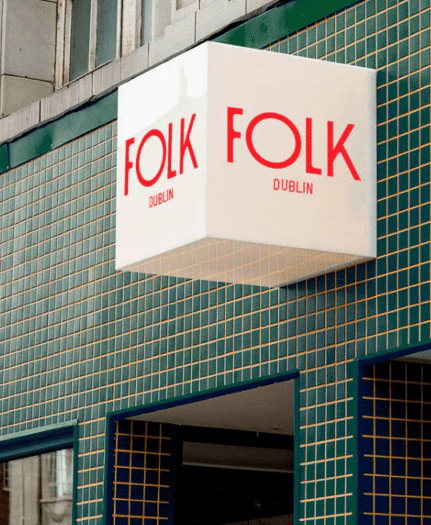
Located off O’Connell Street in the heart of the Irish capital, Folk Dublin is Firethorn’s first development outside of the UK. In partnership with SW3, who will be operational managers for the site, Folk is designed to meet growing demand in one of Europe’s most undersupplied markets, with some of the lowest bed availability of any European city.
The 138-bedroom site will sleep up to 716 guests – directly responding to the gap in affordable tourist accommodation – and feature a vibrant bar, café, and lounge for public use.
Our vision for Folk is to provide exceptional hospitality without the premium price tag, as a hybrid hotel that authentically reflects Dublin’s famous culture. With a focus on food, drink and music, the site will foster a sense of community, creating memorable stays for guests. Selected rooms will be designed by and named after local artists, celebrating the city’s rich heritage, while live music performances will bring the Irish experience to life in the on-site pub.
London living
In the City of London, our acquisition of 5 Lloyd’s Avenue will see us convert (subject to planning) an underused office block into a modern and affordable hybrid hotel. The ground floor will become a public space, creating a strong community hub within a rapidly evolving district that is being shaped by two major nearby student developments.
Situated just off Fenchurch Street, the site benefits from excellent transport links and is within walking distance of major London landmarks, including the Tower of London, Tower Bridge, Borough Market and the future Migration Museum – meeting a clear gap in the market for centrally located, affordable accommodation in the capital that serves both domestic and international tourists, while providing high quality amenities that are also of benefit to the local community.
The project will help to deliver the City of London’s Destination City ambition, positioning the site as a point of arrival for a Square Mile increasingly defined by culture, visitor activity, and outward‑facing experiences – and by its growing pull as a cultural destination in its own right.
The Firethorn approach
Our hybrid hotel developments are designed to deliver high-quality accommodation at accessible price points, within an increasingly unaffordable hospitality landscape. Targeted to a broad traveller demographic – from individuals, to couples, families, and educational groups – we want to foster a vibrant on-site community that supports local economic activity too.
The Dublin and London sites were acquired by Firethorn in partnership with real estate investment managers, SW3 Capital, who will retain operational management of the properties upon completion. With rising demand for experience-driven accommodation, the partnership will leverage the expertise of both Firethorn and SW3 – bringing unique hospitality solutions to prime locations that are both affordable and authentic.
Looking ahead
Firethorn has a proven track record of executing strategic, well-timed deals in response to evolving market demand. Today, we’re actively pursuing new opportunities, with a strong appetite to build our portfolio in cities such as London, Edinburgh, and Manchester, which continue to attract high tourism volumes while sustaining high room rates.
Well-located hybrid hotels can balance affordability and desirability, while offering resilient, operationally driven returns. With strong capitalisation and multi-disciplinary in-house expertise, we can act quickly and decisively to unlock the value of these assets.
As demand to travel to sought-after cities across the UK continues to grow, the availability of affordable accommodation is waning. We are well positioned to respond to this emerging supply gap, developing assets that serve a prominent market need, while generating compelling returns for our shareholders.